


NeuralFin is a shark research company established to advance the scientific understanding, monitoring, and conservation of sharks through an integrated programme of field research, marine observation, education, and applied analytical capability. Its work is grounded in the recognition that effective shark science depends on more than isolated encounters alone; it depends on the capacity to generate structured, longitudinal evidence that can support ecological interpretation, repeated observation, and more informed conservation decision-making over time. Within that broader research model, Shark ID AI functions as a specialised biometric capability developed to strengthen individual identification, catalogue continuity, and the scientific value of photographic encounters.
A Research-Led Model for Shark Science and Conservation


NeuralFin’s research model is grounded in the view that shark science must remain connected to field observation, repeated monitoring, and applied conservation practice if it is to generate knowledge of lasting scientific value. Field encounters provide the ecological context from which meaningful records emerge, while longitudinal observation allows those encounters to be interpreted not as isolated events, but as part of wider patterns of recurrence, spatial use, and encounter history over time. Within this broader foundation, education and scientific communication extend the relevance of the work by translating research and monitoring into forms that can support public understanding, conservation awareness, and wider engagement with shark and ocean science.
Field Research, Monitoring and Conservation Practice
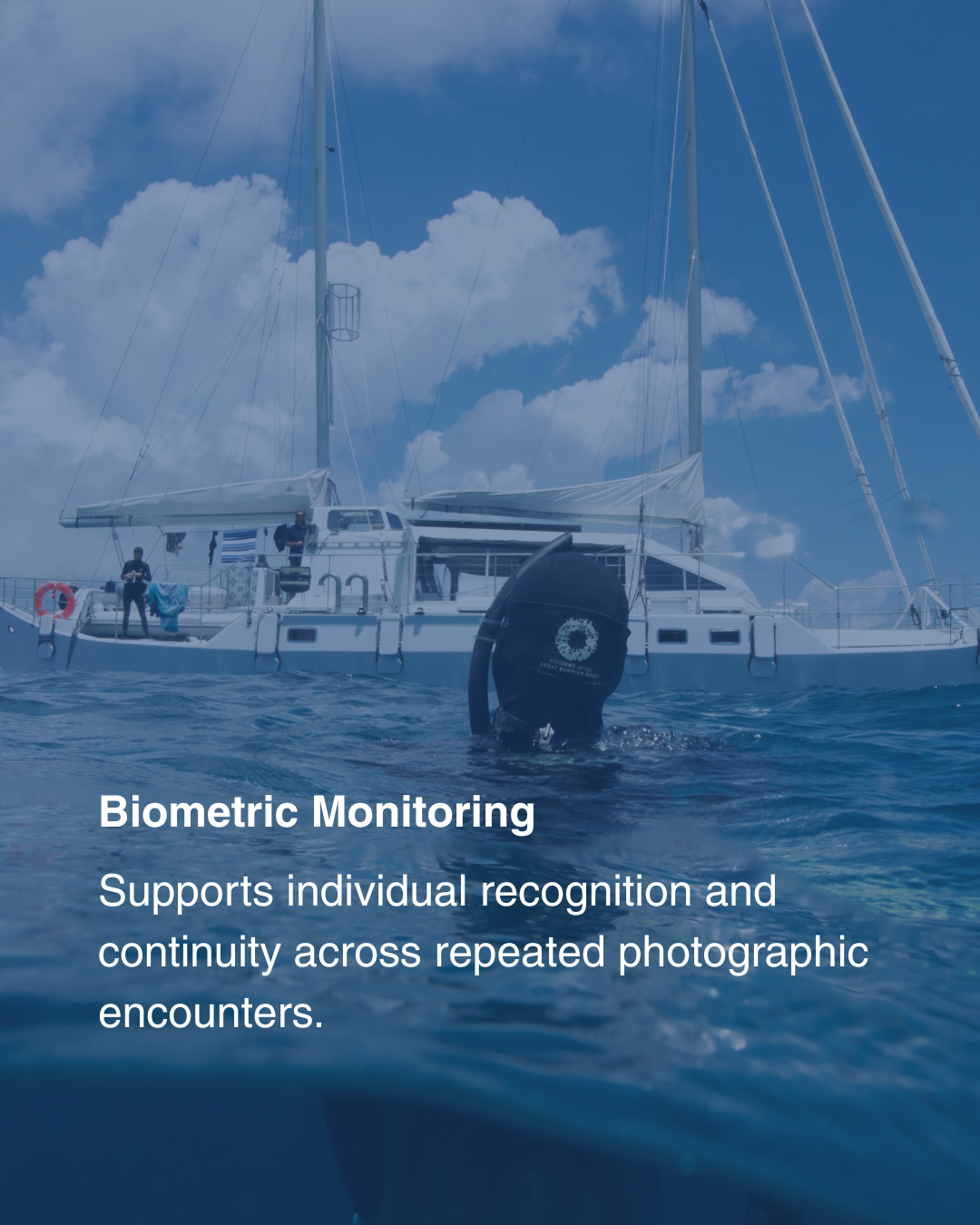
NeuralFin applies biometric identification as a scientific method for resolving individual sharks across repeated photographic encounters, thereby extending shark monitoring from presence-only observation toward individual-level continuity through time. In this context, stable visual attributes such as fin morphology, natural markings, and body pattern structure are treated as biologically informative features capable of supporting repeated recognition without invasive marking or capture-dependent workflows. The research value of this approach lies in its capacity to retain individual identity across encounters, allowing temporal recurrence, encounter history, and site association to be examined with greater precision than would otherwise be possible from unlinked records. Longitudinal monitoring therefore emerges not simply from accumulation of sightings, but from the ability to preserve identity through time, generating a stronger basis for ecological inference, conservation interpretation, and the longer-term study of shark occurrence and movement.
Biometric Identification and Longitudinal Monitoring

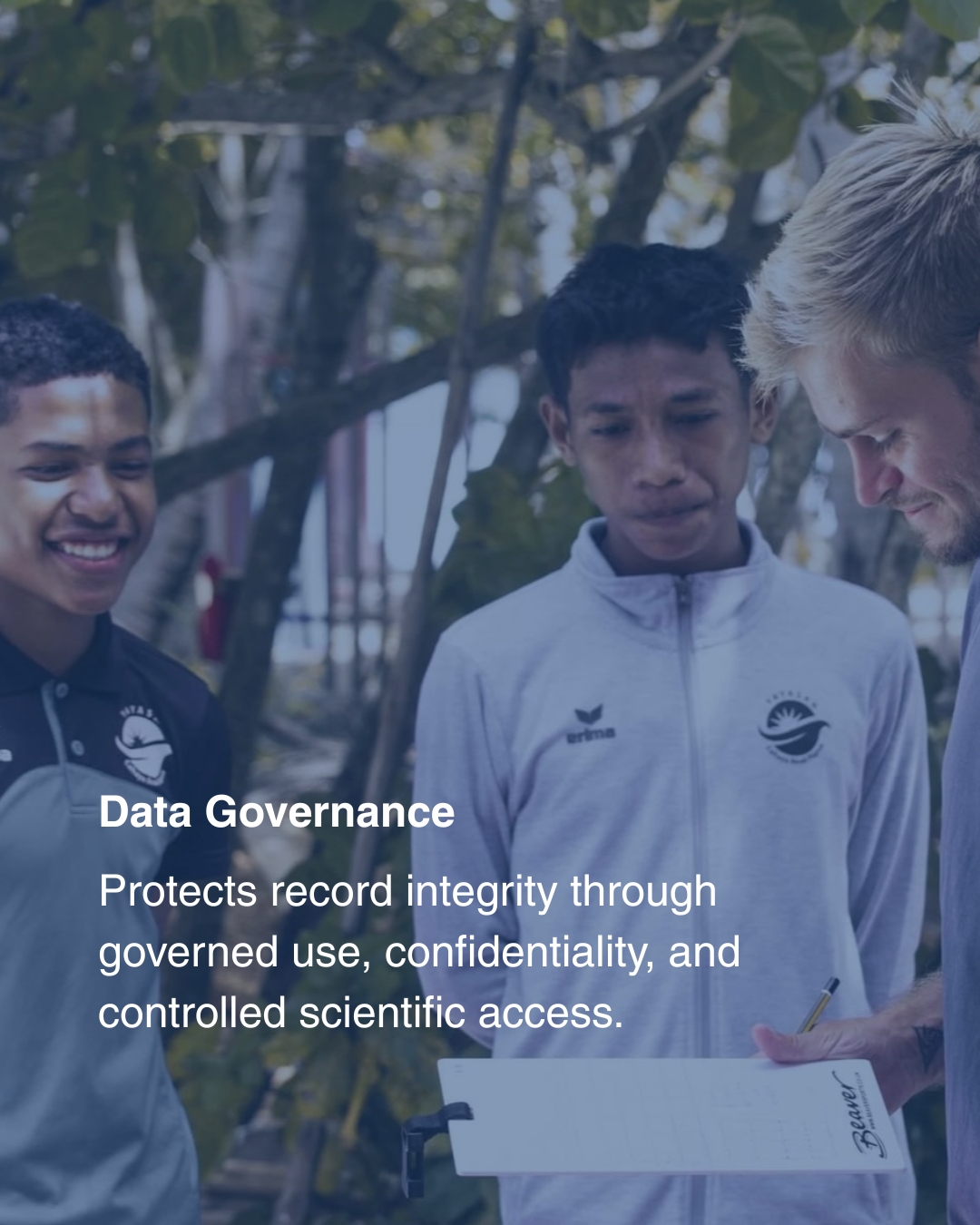
NeuralFin’s methodological framework extends beyond observation and analysis to include the governance conditions under which scientific records retain their credibility, interpretability, and institutional value. In practice, this means that shark records, photographic encounters, catalogue histories, and associated metadata must be handled through clear standards of stewardship, traceability, confidentiality, and purpose-specific use, particularly where research, conservation, and partner-facing workflows intersect. The company’s approach is therefore not only to generate stronger records, but to preserve the integrity of those records through governed access, controlled use, and respect for agreed operational boundaries. In this sense, scientific stewardship is not ancillary to the research process; it is part of the methodological architecture through which evidence remains trustworthy, scientifically usable, and suitable for long-term monitoring, collaboration, and conservation application.
Scientific Stewardship and Data Governance